
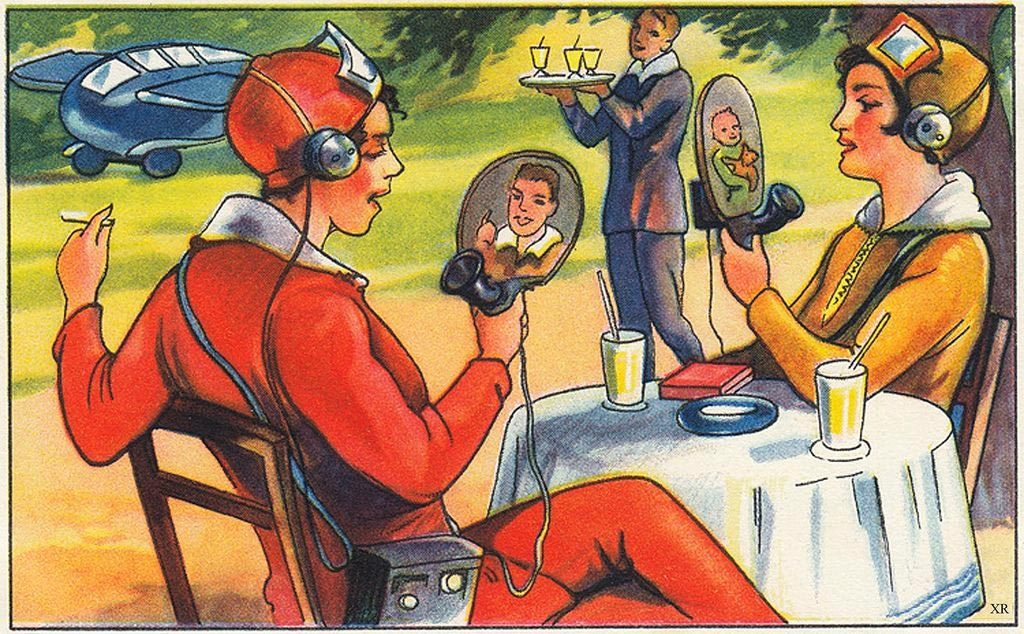
Call for SPECULATIVE ABSTRACTS for a collective paper for NordiCHI 2026 Critiques
Submission deadline: February 16th, 2026
Submit here.
With this call, we warmly invite researchers from Translation Studies, HCI, Interaction Design, Semiotics, Media Studies and beyond to contribute speculative perspectives on the different aspects that will shape (post)human mediated communication across a variety of different media. Building on these provocations, we will curate a speculation-driven paper that engages critically with the possible research trajectories, challenges, and ethical tensions that are likely to define our engagement with future media ecologies.
What is a speculative abstract collection?
Speculative research (Wilie et al. 2017) is a multidisciplinary endeavor that uses creative engagements within a spectrum of possible and impossible future developments as a tool for societal and socio-technical critique. Rather than attempting to predict the future, speculation is used as a way to reflect back on the present, and on how current discourses and ideologies might impact societal and technological development. Speculative design approaches guide the envisioning of alternatives, making it possible to discover multiple and multifaceted perspectives on what the future might look like (Dunne and Raby, 2013).
Speculative research produces different forms of texts and artifacts that encapsulate and ground the scenarios and critique, such as diegetic prototypes (Kriby, 2010), short stories (Thibault et al. 2020), fictional papers (Lindley & Coulton, 2015), and more. Among them, fictional abstracts are a short textual form, similar to academic writing, that allows to reflect on the topics, methods, challenges and findings of future research projects.
Within the textual forms of speculative research, Baumer et al. (2014) and Buruk et al. (2020) explore the idea of curating a collection of speculative abstracts as a way to probe future research in the context of a specific conference (Baumer) or topic (Buruk). We are inspired by this research, and this call aims at proposing a similar probing, but with a wider multidisciplinary ambition to discover how the plural media multiverse might be shaped and come together.
Topic: 2084 – Exploring the Media Multiverse
Our mediascape, intended here as the collection of the different media, mediatic practices and media ideologies that surround and enable our cultures and societies, is in constant development. As for written language or the printing press, the development of mediatic technologies has profound social and cultural implications – and vice versa.
Today, despite the discussions around a single, unified, monopolistic “metaverse”, we see that our mediascape is still – and increasingly so – full of plurality and fragmentation. The multiplication of virtual worlds, digital spaces, and different extended “realities” is accompanied by social polarization, specialization of online spaces, and hybridization across different realities, platforms, and narrative universes. This multiplication suggests that, instead, we are moving towards a Media Multiverse (Thibault 2024), a mediascape shaped by heterogeneity.
This call for speculative abstracts is then an attempt to explore the Media Multiverse, and its possible realizations and consequences in the year 2084 (the year of arcade game Robotron: 2084, which recalls the struggle between human and machine, but also echoes 1984, and therefore the role of media in social control and political dynamics).
In the Media Multiverse of 2084, we do not have a unified mediascape, but instead a pluralistic and kaleidoscopic one, often governed by dynamics of translation, adaptation, and navigation of users and textualities across different realities, worlds, and universes. This will be accompanied by other mediatic techno-social innovations related to Extended Realities, bio-tracking, adaptive algorithms, wearables, bodily technologies, and more. Together with new technologies, new paradigms will also emerge, and if today we have media convergence, posthuman, and post-digital frameworks, new, fresh, and critical ideas will have emerged.
We welcome a wide range of approaches to different sorts of futures, including depictions of the 2084’s Media Multiverse through the lens of utopianism, explorations of dystopian and utopian (Atwood 2011) frictions, cautionary tales, critical interrogations, parodies and so on.
Submissions from diverse domains — including but not limited to Translation Studies, HCI, Semiotics, and Media Studies, Linguistics — are strongly encouraged and warmly welcome.
How to write a speculative abstract?
Abstracts should be ~150 words long, provide a title for the fictional future paper, authors’ affiliations (real or fictional), and may optionally include an image. The abstracts ought to appear to have been written in 2084 and to report some fictional research endeavor from that time, focusing on some aspect of the Media Multiverse or, more in general, the future of our mediascape. Examples can be found in Baumer et al. (2014), Buruk et al. (2020) and Pargman et al. (2019 – see also the guidelines and examples they have outlined here.
Abstracts should keep a clear focus as they may draw on today’s technologies and topics but can also move beyond them to imagine future studies and their findings (Pargman et al. 2018, Pargman et al, 2019).
The selection criteria to determine which abstracts will be accepted will focus on ensuring multidisciplinarity, wide range of technologies, and variety in approaches as well as perspectives.
The resulting paper and collection of abstracts will be submitted to NordiCHI 2026, Critiques track. If accepted, the paper will be published in the conference proceedings, with all contributors of selected abstracts sharing authorship.
The abstracts can be submitted here.
Timeline:
Submission Deadline for abstracts: February 16th, 2026
Notification of Decision – February 20th, 2026
Submission Prepared and Sent to Authors for Review – April 1st, 2026
Revision Request Deadline by Authors – April 10th, 2026
Full Paper Submission to NordiCHI 2026: 23rd, April 2026
References
Atwood, M. (2011) Dire Cartographies: The Roads to Ustopia. In In Other Worlds: SF and the Human Imagination. Nan A Talese, New York, 66–96
Baumer, E. P., Ahn, J., Bie, M., Bonsignore, E. M., Börütecene, A., Buruk, O. T., … & Yip, J. (2014). CHI 2039: speculative research visions. In CHI’14 Extended Abstracts on Human Factors in Computing Systems (pp. 761-770).
Buruk, O. O., Özcan, O., Baykal, G. E., Göksun, T., Acar, S., Akduman, G., … & Yildiz, M. (2020, April). Children in 2077: Designing children’s technologies in the age of transhumanism. In Extended Abstracts of the 2020 CHI Conference on Human Factors in Computing Systems (pp. 1-14).
Dunne, A., & Raby, F. (2013). Speculative Everything: Design, Fiction, and Social Dreaming. The MIT Press.
Kirby, D. (2010). The future is now: Diegetic prototypes and the role of popular films in generating real-world technological development. Social studies of science, 40(1), 41-70.
Lindley, J., & Coulton, P. (2015). Game of drones. In Proceedings of the 2015 annual symposium on computer-human interaction in play (pp. 613-618).
Pargman D., Erikkson, E., Comber, R., Kirman, B., & Bates, O. (2018). Guidelines for Fictional Abstracts. https://futuresnordichi.wordpress.com/2018/05/ 22/guidelines-for-fictional-abstracts/
Pargman, D. S., Eriksson, E., Bates, O., Kirman, B., Comber, R., Hedman, A., & Van Den Broeck, M. (2019). The future of computing and wisdom: insights from human–computer interaction. Futures, 113, 102434.
Thibault, M., Buruk, O. O., Buruk, S. S., & Hamari, J. (2020). Transurbanism: Smart cities for transhumans. In Proceedings of the 2020 ACM designing interactive systems conference (pp. 1915-1928).
Thibault, M. (2024). Exploring Interreal Translation. MikaEL, 17(1), 155-171.
Wilkie, A., Savransky, M., & Rosengarten, M. (Eds.). (2017). Speculative research: The lure of possible futures. Taylor & Francis.
 InterReality
Leave a comment